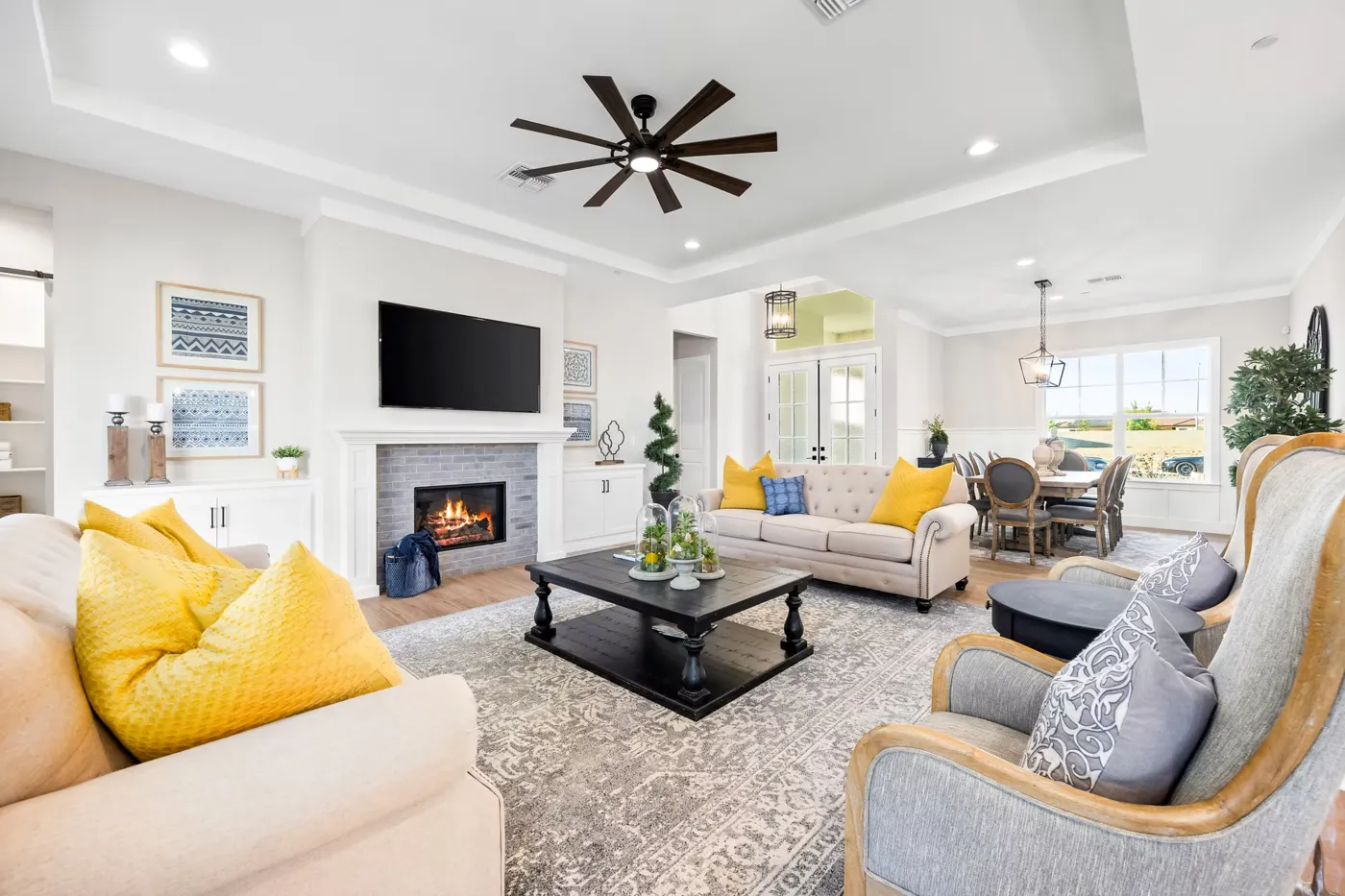
An empty Greater Boston listing is a hard sell. Buyers struggle to read scale in a bare room, vacant photos get skipped in the scroll, and a beautiful Wellesley or Newton home can look smaller and colder than it is. Staging fixes that — and in 2026 you have two very different ways to do it. Physical staging brings real furniture into the house. Virtual staging adds furniture digitally to the photographs. They cost wildly different amounts, work on different timelines, and win in different situations. Here's the honest breakdown for a Boston-area agent deciding which one a listing actually needs.
The short answer
Virtual staging costs a small fraction of physical staging and turns around in about a day, which makes it the default for vacant listings on a normal marketing budget. Physical staging costs far more and takes longer, but it's what an in-person buyer and their agent walk through — so it still earns its price on high-end, slow-moving, or flagship properties where the in-room experience closes the deal. The smart play isn't one or the other across the board; it's matching the method to the property, the price point, and how the home will actually be shown.
What each one actually is
Physical (traditional) staging
A stager furnishes the home with real furniture, art, rugs, and accessories — sometimes a few accent pieces in an occupied home, sometimes a full furnishing of a vacant one. It's the gold standard for the lived experience: the home shows beautifully in person, at the open house, and on camera, because what the camera sees is really there.
Virtual staging
Your photographer shoots the empty (or cleared) rooms, and furniture, art, and styling are added to the images digitally. The result is a set of warm, furnished-looking listing photos — at a fraction of the cost and turnaround. The catch: it only exists in the photos. Walk into the house and the rooms are still empty.
Cost: this is the headline difference
There's no contest on price. Industry-wide in 2026, virtual staging runs roughly $20–$75 per photo for standard listings (luxury-grade work runs higher, into the $100+ range per image), with most listings staged from a handful of photos. Physical staging runs into the thousands — commonly a setup fee plus monthly rental, with full vacant-home staging frequently landing in the low-to-mid four figures and climbing from there on larger homes. Put bluntly, virtual staging typically costs 85–95% less than furnishing the home for real, and it's ready in about 24 hours instead of a week of scheduling and delivery. For most vacant listings, that math decides it. (For how staging fits the rest of a Boston marketing budget, see our marketing playbook for Boston agents and the real estate video cost guide.)
The honest trade-offs
- The empty-house problem: virtual staging makes the photos gorgeous, but the buyer still walks into bare rooms. That gap between the listing and the showing can deflate the in-person visit if expectations aren't set.
- Speed and flexibility: virtual wins easily — restyle a room, swap a modern look for a traditional one, or stage three rooms overnight. Physical staging is fixed once it's installed.
- The in-person sell: physical staging wins. On a luxury listing where buyers are emotional and deliberate, real furniture defining the flow and scale of a room does work no photo can.
- Credibility: good virtual staging is invisible; cheap virtual staging (floating furniture, warped perspective, impossible scale) reads as fake and quietly costs you trust. Quality matters more than the line item.
The rule everyone forgets: disclosure
Virtual staging is completely legitimate — but only when it's disclosed. Across most MLS systems and under the REALTOR® Code of Ethics' truth-in-advertising standard, virtually staged photos should be clearly labeled "virtually staged," and you must never digitally alter or remove permanent features in a way that misleads: don't paint over water damage, erase a power line beside the house, remove a load-bearing column, or change a view. Adding furniture to an empty room and labeling it is fine. Hiding a defect is a misrepresentation that can sink a deal — or worse. The safe line: stage the styling, disclose the staging, never touch the facts of the property.
When each one wins for a Boston listing
Reach for virtual staging when…
The home is vacant and priced in the broad market; the marketing budget is normal; you need photos live fast; or you want to show a room's potential (a home office vs. a nursery) without committing furniture. For most Cambridge condos and mid-market Brookline and Newton single-families, virtual staging plus a strong photo gallery and a 3D tour is the efficient package.
Invest in physical staging when…
It's a luxury or flagship listing where the in-person walkthrough is the closing moment — think Weston or Wellesley estates and high-end Lexington homes; the property is slow-moving and the showing experience needs to do more work; or the price point justifies the spend because the upside on the sale dwarfs the staging cost.
Or do both
A common high-end move: physically stage the rooms that sell the home (living, primary suite, kitchen) and virtually stage the secondary spaces. The buyer gets a real, furnished experience where it counts, and the gallery looks complete top to bottom.
Staging is one layer — not the whole campaign
However you furnish the rooms, staging is the set, not the production. The images and film built on top of it are what actually move a Greater Boston listing: a complete daytime gallery, a cinematic listing video that shows how the home flows, a twilight hero shot on flagship homes, and the personal-brand content that wins your next listing. Virtual staging makes the photos warm; the photographer and the marketing around them make the listing sell. If you're weighing where the budget goes, our guide to photography vs. video for Boston listings is the next read.
The bottom line
Virtual staging is the right default for vacant listings: it's a fraction of the cost, ready in a day, and — disclosed honestly — completely legitimate. Physical staging is the right investment when the in-person showing is the moment the sale is won. Match the method to the property and the price point, label virtually staged photos every time, and never alter the facts of the home. Tell us about the listing and we'll recommend the staging and media mix that fits the property and the budget.
Frequently asked questions
Is virtual staging cheaper than physical staging?
Dramatically. Industry-wide in 2026, virtual staging runs roughly $20–$75 per photo (more for luxury-grade work), while physical staging runs into the thousands for a vacant home. Virtual staging typically costs 85–95% less and is ready in about a day instead of a week.
Do you have to disclose virtual staging?
Yes. Most MLS systems and the REALTOR® Code of Ethics require virtually staged photos to be clearly labeled as virtually staged. You may add furniture and styling to an empty room, but you must never digitally remove or hide permanent features or defects in a way that misleads buyers.
Does virtual staging actually help a listing sell?
It helps the listing get noticed and understood. Furnished-looking photos earn more clicks and help buyers read a room's scale and purpose, which matters most for vacant homes that otherwise photograph cold and empty. The caveat is the in-person showing, where the rooms are still bare.
Should a luxury Boston listing use virtual or physical staging?
Often physical, or both. On high-end Weston, Wellesley, or Lexington homes where the in-person walkthrough closes the deal, real furniture does work photos cannot. A common approach is to physically stage the key rooms and virtually stage the secondary spaces so the gallery still looks complete.