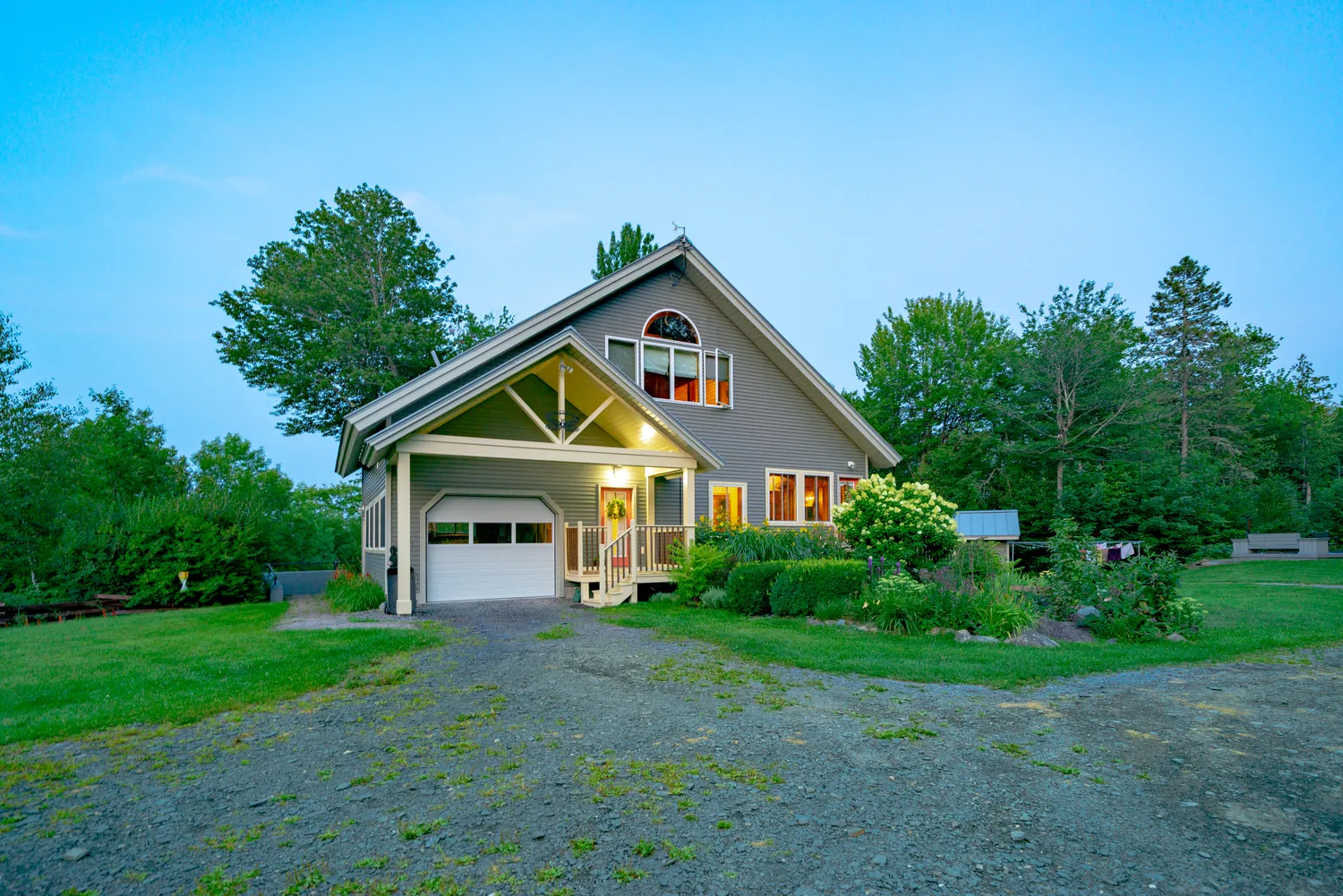
A twilight aerial shot works when the location gives it something to work with — a skyline to sit against, water to catch the last light, or enough tree canopy that the house reads as a private world rather than a rooftop in a grid. It doesn't work everywhere equally. Here's a town-by-town look at what makes a Greater Boston twilight aerial shot land, and what to plan around before you book one.
The short answer
Three things make a location twilight-aerial-ready: a west-to-southwest sightline so the sky behind the house actually holds color during the shoot, a reflective or layered backdrop — water, a skyline, or dense tree cover — that gives the frame depth instead of flat rooftops, and controlled airspace cleared in advance, since almost every town below sits inside or near Logan, Hanscom, Norwood, or Beverly's airspace. Get those three right and a twilight aerial earns its place as the hero image; skip them and you're paying for a sunset behind a fence line.
Boston, Cambridge & the Seaport skyline
For a listing with a real sightline to downtown, the skyline itself becomes the backdrop — a twilight aerial pulled back far enough to frame the property against the lit-up Boston skyline is one of the strongest hero shots this market produces. It works best for higher floors and waterfront-adjacent addresses in and around Boston and Cambridge, where the skyline reads clearly rather than as a hazy smear on the horizon. This is also the tightest airspace on the list: downtown sits under Logan's Class B, so the flight plan and LAANC authorization have to be locked in before the crew ever shows up, not improvised on site.
The North Shore harbors: Marblehead, Salem, Gloucester, Beverly, Manchester-by-the-Sea
Harbor towns give a twilight aerial something skyline shots in the suburbs can't: moving water that catches and scatters the last light instead of just reflecting it flat. A house near the water in Marblehead, Salem, Gloucester, Beverly, or Manchester-by-the-Sea shot from the air at dusk, with boats or a harbor mouth in frame, tends to outperform a comparable inland shot of the same square footage — the water does half the work. Manchester's own harbor is smaller and quieter than Gloucester's or Beverly's, which suits a tighter, more intimate framing than the wider harbor towns. Beverly Regional's airspace governs most of this stretch, and the harbor geometry itself narrows the useful flight paths, so this is a route worth scouting on a prior visit rather than the shoot day itself.
The South Shore harbors: Hingham & Cohasset
Same principle, different coastline. Hingham harbor and the rocky Cohasset shoreline give a twilight aerial the same water-and-light advantage as the North Shore, with a quieter, more residential backdrop that suits an estate listing rather than a downtown-adjacent one. Both sit outside the tightest Logan grids but still inside Boston's broader controlled-airspace footprint, so LAANC still applies — it's a faster authorization than downtown, not a skipped one.
The tree-canopy suburbs: Wellesley, Weston, Lexington, Concord, Dover
Inland estate towns don't have water or a skyline to lean on, and they don't need one — the asset here is tree canopy and lot size. A twilight aerial over a wooded property in Wellesley, Weston, Lexington, Concord, or Dover pulled back far enough shows the house sitting inside its own grounds, ringed by dark tree lines against a fading sky — the shot that signals privacy and acreage in a way a ground-level photo can't. Weston and Lexington sit under Hanscom's airspace rather than Logan's, which is typically a more straightforward authorization, but still one that needs to be filed before the flight, not assumed.
Newton, Brookline, Belmont & Winchester: the close-in suburbs
These towns split the difference — closer to the city than the estate belt, denser lots, but still enough mature tree cover and, in spots, a distant skyline sightline to work with. Newton, Brookline, Belmont, and Winchester twilight shots tend to work best when the flight plan picks a angle that favors whichever asset the specific lot has — a tree line, a pond, or a partial skyline view — rather than a generic straight-on hover. This is where scouting the exact address in advance earns its keep the most; the difference between an average lot and a great one here is often just the angle.
NH Seacoast & Southern Maine: Portsmouth, Rye, Kennebunkport, Cape Elizabeth
North of Boston, the coastline itself is the draw. Portsmouth and Rye on the NH Seacoast, and Kennebunkport and Cape Elizabeth in Southern Maine, give a twilight aerial open ocean or tidal-marsh light that inland Boston listings simply can't match. The tradeoff is tide timing, not airspace — a low-tide window can leave mudflats in frame where a high-tide shot would show open water. We cover the tide-and-sunset math in detail in our coastal twilight shoot guide, which is worth reading before booking a shoreline shoot anywhere on this stretch.
What to ask before booking a twilight aerial on your listing
- Does the address actually have a usable backdrop? Water, skyline, or real tree canopy — a twilight aerial over a flat, exposed lot with none of the three is a harder sell than a well-lit ground twilight shot instead.
- Has the flight path been scouted, not just the address checked? The best angle on a wooded or waterfront lot is rarely the first one a pilot tries.
- Is the LAANC authorization already filed for that address? See our drone laws guide for what has to be true before the drone takes off, regardless of town.
- What's the light window that day? Twilight aerials live inside the same roughly 20-minute post-sunset window as ground twilight shots — see our twilight vs. daytime guide for why that window is non-negotiable.
The bottom line
A twilight aerial isn't a shot every listing needs, and it isn't a shot every address is set up to deliver well. The towns above each give it something different to work with — a skyline, a harbor, a tree line, open water — and the right move is matching the shot to what the specific lot actually offers rather than defaulting to the same hover-and-shoot on every listing. Tell us the address and we'll tell you honestly whether a twilight aerial is worth booking, and what angle we'd plan for it.
Frequently asked questions
Does every listing benefit from a twilight aerial shot?
No. A twilight aerial earns its cost when the address has a real backdrop to work with — water, a skyline sightline, or dense tree canopy. On a flat, exposed lot with none of those, a ground-level twilight shot or a daytime aerial usually delivers more for the money. See our drone photography cost guide for how that tradeoff affects pricing.
Which Greater Boston towns work best for a skyline twilight aerial?
Addresses in and around Boston and Cambridge with a genuine sightline to downtown work best — higher floors and waterfront-adjacent lots especially. Further out, the skyline fades into haze rather than reading as a backdrop, so inland suburbs typically lean on tree canopy instead.
Do coastal towns need different planning than inland ones?
Yes. Coastal addresses in places like Marblehead, Hingham, or Kennebunkport add tide timing on top of the sunset window, since a low tide can put mudflats in frame instead of open water. Inland tree-canopy towns like Weston or Concord only need to plan around the light and the airspace.
Does the airspace change which flight path is used for a twilight shoot?
Often, yes. Downtown Boston addresses sit under Logan's Class B and need LAANC authorization planned well ahead of the shoot; towns like Weston and Lexington fall under Hanscom's airspace instead, which is typically a more straightforward authorization but still required. See our full drone laws guide for the town-by-town breakdown.