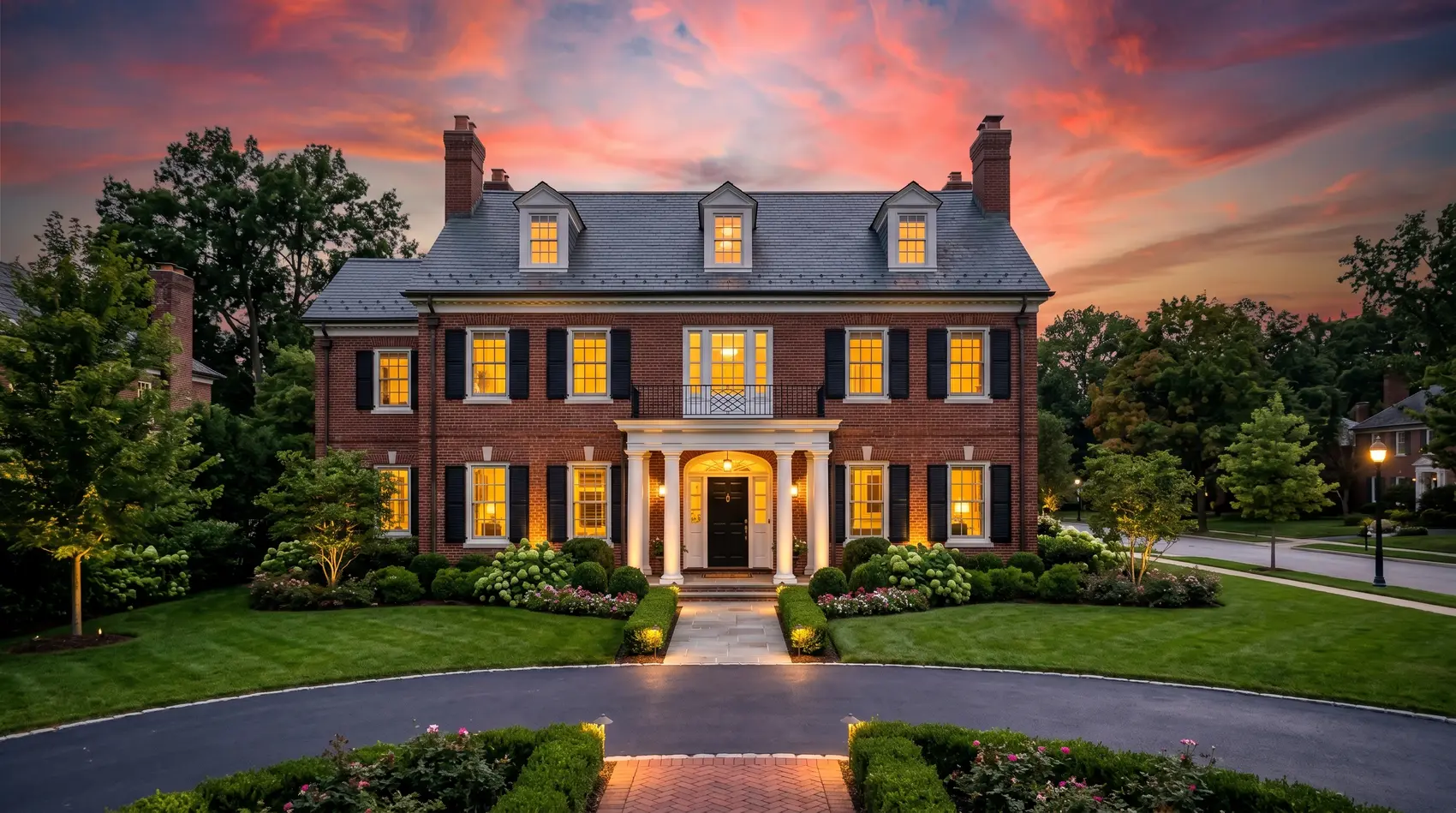
A huge share of Greater Boston's listing volume isn't a single-family home with a yard and a driveway reveal — it's a unit inside a building. South End brownstones converted to condos, Back Bay and Beacon Hill walk-ups, Seaport and Fenway high-rises, Brookline and Cambridge mid-rises near the T. The video that sells one of those units is a genuinely different piece of work than the video that sells a Weston estate, and most of what's written about real estate video assumes the house-with-a-lot version by default. Here's what actually makes a condo or high-rise listing video work in Boston.
A condo listing video isn't a small version of a house listing video
A single-family listing film typically opens on the property in its setting — the approach, the lot, the grounds — because the land is part of what's being sold. A condo doesn't have that story. The building's exterior isn't the seller's to show off in the same way, and there's no driveway reveal to open on. That means the whole narrative has to shift to what a condo buyer actually weighs: the view, the light, the finishes, the building's amenities, and how the unit connects to the neighborhood around it. A video built on the single-family template — long exterior establishing shot, slow push toward the front door — usually falls flat on a condo because it's answering a question the buyer isn't asking.
What actually sells a condo or high-rise unit on video
- The view, shot toward it, not just from it. If the unit has a skyline, harbor, or Charles River view, the video needs a real "window shot" — framed and exposed for what's outside, not a blown-out square of white light in the background of a room shot. This is one of the most common misses on a rushed condo shoot.
- Natural light and flow. Interior condos live or die on how open and bright they feel on camera. A steady, well-paced walkthrough that shows how rooms connect matters more here than it does in a large house, where each room can stand alone as its own shot.
- Building amenities. A gym, a roof deck, a concierge desk, secured parking, an elevator, a package room — these are real selling points for a condo buyer and belong in the edit, usually as a short montage rather than individual scenes.
- Walkability and neighborhood. A condo buyer is buying a location as much as a unit — proximity to the T, to restaurants, to the Common or the Esplanade. A few establishing shots of the block and the walk to the nearest station do real work here.
None of this replaces solid interior photography — the video and the photo gallery are still telling the same story in different formats.
Where drone still earns its place on a condo listing
Aerial can't shoot "the lot" on a condo the way it does on a house, but it isn't off the table — it just does a different job. A drone establishing shot of the skyline or the building itself, especially at twilight, sets the scene the way a lot shot would on a single-family home; see our twilight vs. daytime guide for why that window matters. If the building has a roof deck or courtyard amenity space, an aerial pass over it can sell the amenity better than a ground shot can. And a wide aerial orientation shot — the building, the block, the walk to the water or the T — gives a high-rise listing the same sense of place a suburban aerial gives a house.
The catch is airspace. Much of the Boston condo market — the Seaport, the waterfront, Back Bay, Beacon Hill — sits deep inside Logan International's Class B airspace, where LAANC grids run low and some read zero feet close to the tower cluster. A legal flight over or near a downtown high-rise needs an FAA Part 107 pilot who's checked the grid for that specific building before quoting the shot, not assumed it. The full breakdown is in our Boston-area drone laws guide.
Building access is its own logistics problem
A house shoot is mostly a scheduling problem — get the crew there when the home is ready. A condo or high-rise shoot adds a layer most agents don't think about until the morning of: building access. Concierge desks often need advance notice to let a crew in with gear. Freight elevators, if the building has one, sometimes need to be booked ahead for equipment. HOA or condo board rules can restrict filming in common areas — lobbies, hallways, roof decks — without prior approval. And parking near a downtown building for a crew vehicle is its own errand. None of this is hard, but it has to be handled a few days ahead of the shoot, not discovered when the crew is standing in the lobby. Building it into the shoot prep checklist alongside the usual staging and declutter items keeps the shoot day from stalling before it starts.
How long should a condo listing video be
The same guidance holds as for any Boston listing: a 60- to 90-second main video is the sweet spot, with a separate 15- to 30-second vertical cut for social — see our full breakdown on video length and photo count. A condo doesn't need a longer video to compensate for having less square footage; if anything, a tight edit that moves from the view, to the light, to the amenities, to the neighborhood in under 90 seconds respects how a downtown buyer actually watches on a phone between showings.
The bottom line
A Boston condo or high-rise listing video succeeds by telling a different story than a suburban house video — the view, the light, the building, and the block, rather than the lot and the approach. Drone still has a role, mostly at twilight and mostly aimed at the skyline or the amenity space rather than the unit's own "lot," but it has to be planned around Logan-area airspace. And the shoot itself needs building access sorted a few days ahead, not the morning of. Tell us about the unit and we'll plan the shots — and the building logistics — around it.
Frequently asked questions
Does a condo listing need drone photography?
It can help, but differently than on a house. A drone shot won't cover "the lot" the way it does on a single-family home, but a twilight skyline establishing shot, a pass over a roof deck or courtyard amenity, or a wide orientation shot of the building and block can all strengthen a condo listing. It's most worth it on a higher-end unit or a building with real view or amenity value.
What's the biggest difference between a house listing video and a condo listing video?
The narrative. A house video usually opens on the property in its setting — the lot, the approach, the grounds. A condo doesn't have that, so the story shifts to the view, the natural light, the building's amenities, and the walk to the neighborhood, rather than the exterior of the building itself.
Do I need building permission to film in a condo or high-rise?
Often yes, for common areas. Lobbies, hallways, roof decks, and amenity spaces are usually governed by the HOA or condo board and may need advance notice to the concierge or property manager, especially for a full production crew. It's worth confirming access a few days before the shoot, not the morning of.
Is a drone legal to fly near downtown Boston high-rises?
Yes, with the right authorization. Much of downtown Boston, including the Seaport and Back Bay, sits inside Logan International's Class B airspace, where a licensed FAA Part 107 pilot needs an LAANC authorization for the specific location and altitude before flying — some grids close to the tower cluster read zero feet and require extra planning. See our full drone laws guide for the details.